1916
The Republic’s Promise
The [Proclamation of the Irish Republic (1916)](entity:event-recall-event-proclamation-of-the-iri-f586e8b9fe42) promised civil and religious liberty, equal rights, and equal opportunities, declaring that the nation’s children should be cherished equally. Its ideal of universal care stands as a distant moral measure for the abandonment and institutional confinement that the novel later reveals.
Before April 1946
Sarah’s Pregnancy
At sixteen, Sarah, [Bill Furlong](entity:character-recall-character-bill-furlong-01db5048811c)’s mother, became pregnant while working as a domestic servant. Her family rejected her, exposing the social stigma that could leave an unmarried mother and her child without shelter or support.
Before Bill’s birth
A Home at the Mansion
Rather than dismiss Sarah, [Mrs Wilson](entity:character-recall-character-mrs-wilson-9042944245f3) allowed her to stay and continue working at [The Wilsons’ Mansion](entity:location-recall-location-72a17a347234). Her decision gave Sarah and the child a home when their own family had turned away from them.
April 1, 1946
Bill’s Birth
Bill was born in hospital and brought back to [The Wilsons’ Mansion](entity:location-recall-location-72a17a347234) with his mother. His father’s identity was never established, and people remarked that a boy born on April Fool’s Day might grow up to be a fool.
Bill’s infancy and early childhood
A Childhood in the Kitchen
Bill spent his infancy in a Moses basket in [Mrs Wilson](entity:character-recall-character-mrs-wilson-9042944245f3)’s kitchen, then grew up among its tiled floors, serving plates, blue jugs, and black range. Mrs Wilson gave him small jobs and helped him learn to read, treating him with a care that made the house a refuge.
Bill’s early childhood
Ned’s Quiet Care
[Ned](entity:character-recall-character-ned-160602ecacc7), who lived and worked at [The Wilsons’ Mansion](entity:location-recall-location-72a17a347234), helped make Bill’s childhood secure. He later recalled polishing the boy’s shoes, tying his laces, buying him his first razor, and teaching him to shave; his steady attention gave Bill a sense of belonging.
Bill’s toddler years
The Stolen Hay
During a hard winter, [Ned](entity:character-recall-character-ned-160602ecacc7) secretly carried hay to feed another man’s hungry ass. He later told Bill that a frightening encounter on the lane had stopped him, and confessed that he had regretted the theft ever since.
Bill’s school years
The Missing Father
At school, Bill was jeered at for his uncertain parentage and once came home with spit covering his coat. His connection to [Mrs Wilson](entity:character-recall-character-mrs-wilson-9042944245f3)’s household offered some protection, but he still understood that other children saw his birth as a mark against him.
One Christmas during Bill’s childhood
The Unanswered Christmas
Bill wrote to Santa asking for his father or a [farm jigsaw puzzle](entity:object-recall-object-c0ca5cbd0ad3). Instead, he received soap and a nailbrush, a hot-water bottle from [Ned](entity:character-recall-character-ned-160602ecacc7), and an old copy of A [Christmas](entity:time-recall-time-christmas-a573265d0167) Carol from [Mrs Wilson](entity:character-recall-character-mrs-wilson-9042944245f3); he hid in the cow-house to cry because neither Santa nor his father had appeared.
When Bill was twelve
Sarah’s Sudden Death
Sarah collapsed and died while wheeling a barrow of crab-apples toward the house. Doctors said that she had suffered a brain haemorrhage, leaving Bill to grow up without his mother and without ever learning who his father was.
Bill’s adolescence
Mrs Wilson’s Encouragement
[Mrs Wilson](entity:character-recall-character-mrs-wilson-9042944245f3) encouraged Bill to read carefully and use a dictionary, and she praised him after he won a school spelling prize. Her words made him feel, for a time, that he mattered as much as any other child.
After technical school
Bill Builds a Livelihood
After a few years at technical school, Bill began working in the coal yard and gradually worked his way up. He proved capable in business, kept his head down, and acquired the habits of diligence and restraint that would later make him wary of risking his family’s security.
During Bill’s school years
The Mushroom Line
One summer, Bill worked on a production line in a mushroom factory. When he reached the end of the line, he saw new mushrooms pushing through the compost where he had begun, and understood how the same labor would begin again each day.
After Bill began working at the coal yard
Marriage and a New Start
Bill met Eileen while she worked in an office and courted her with films and evening walks. When they became engaged, [Mrs Wilson](entity:character-recall-character-mrs-wilson-9042944245f3) gave him money to start a business, helping him establish a life beyond his childhood dependence on her household.
By 1985
A Family of Five Daughters
Bill and Eileen made a home in [New Ross](entity:location-recall-location-new-ross-0d5303e0636d) and raised five daughters: Kathleen, Joan, Sheila, Grace, and Loretta. Bill took pride in their schooling, music, manners, and small accomplishments, and sometimes felt a private joy that they were his own.
Years after Bill’s marriage
Ned’s Confession
On a Sunday visit to [The Wilsons’ Mansion](entity:location-recall-location-72a17a347234), Bill heard [Ned](entity:character-recall-character-ned-160602ecacc7) describe the hay theft and the care [Mrs Wilson](entity:character-recall-character-mrs-wilson-9042944245f3) had shown Bill and his mother. Ned could not identify Bill’s father, though he recalled visitors from England around the time of Bill’s conception.
1985
The 1985 Hardship
As the novel’s present begins, [New Ross](entity:location-recall-location-new-ross-0d5303e0636d) is strained by unemployment, business closures, and families unable to pay their bills. Across [Ireland](entity:location-recall-location-5359e95725af), young people are emigrating, while political tensions surround the [Signing of the 1985 Anglo-Irish Agreement](entity:event-recall-event-1985-1928065edc54) and public hopes for religious wonders remain alive.
November 1985
The November Cold
After the clocks go back, hard winds strip the trees and rain swells the [River Barrow](entity:location-recall-location-011bc66a0805). Townspeople endure the cold as best they can, while Bill’s coal and timber business becomes busier with each raw day.
November 1985
Bill’s Uneasy Generosity
Bill worries over the poverty he sees on his delivery routes, from unpaid electricity bills to children scavenging for food and fuel. When he gives money to a poor child, Eileen argues that the child’s father is responsible for the family’s hardship; Bill cannot accept that the child should bear the blame.
Early December 1985
The Lights of Christmas
The family goes into town to see the [Christmas](entity:time-recall-time-christmas-a573265d0167) lights switched on. Loretta is frightened by Santa and stays close to Bill, who reassures her but privately wonders whether she will be ready for what the world may bring.
Early December 1985
Bill’s Childhood Returns
While the family makes its [Christmas](entity:time-recall-time-christmas-a573265d0167) cake, Bill remembers the childhood Christmas when he received the hot-water bottle and the book but not the father or farm jigsaw he had asked for. He lies to Sheila about having received the jigsaw, unwilling to expose the old hurt to his daughters.
Early December 1985
The Girls’ Christmas Letters
Bill and Eileen read their daughters’ letters to Santa and decide what they can afford to buy. The ordinary family ritual makes Bill feel both grateful for his daughters and unsettled by how quickly the years pass and how little time he gives himself to reflect.
December 1985
Rumors at the Convent
Town gossip describes the [Good Shepherd Convent](entity:location-recall-location-e0021684a5de) as a laundry and training school where girls may be made to work, hidden away, or separated from their babies. The rumors are mixed with excuses and denials, while the institution continues to serve respected local households and businesses.
December 1985, before Christmas week
The Girl’s Plea
During a delivery to the convent, Bill finds girls polishing a chapel floor on their hands and knees. One girl begs him to take her to the river or let her out through the gate, saying that she has nobody and wants to drown herself.
December 1985, during the first convent visit
Bill Turns Away
Bill refuses to help the girl escape, telling her that he cannot take her anywhere. A nun arrives, and Bill leaves without challenging what he has seen, though he notices the convent’s locked doors and the broken glass along its wall.
That night
Eileen’s Warning
Bill tells Eileen about the girl and the conditions at the convent. Eileen urges him to stay out of it, arguing that the family has nothing to answer for and that keeping on in life requires ignoring some things; Bill counters that [Mrs Wilson](entity:character-recall-character-mrs-wilson-9042944245f3) once chose not to ignore his own mother’s trouble.
The Saturday before Christmas
Kathleen’s Disappointment
While Bill is out making deliveries, Kathleen manages the coal-yard office and grows upset when Eileen tells her she must go to the dentist instead of shopping with her friends. Bill tries to comfort her, but the exchange leaves him aware of how much the family’s routines and obligations govern their days.
Early Sunday morning before Christmas
The Neighbor’s Kettle
On a freezing morning, Bill finds the yard padlock seized by frost and asks a neighbor for hot water. She gives him the kettle and offers tea; her modest hospitality briefly lets him imagine another life, then he returns to the work waiting for him.
Early Sunday morning before Christmas
The Girl in the Coal Shed
At the convent to deliver coal, Bill opens the coal shed and finds a young girl locked inside, cold, filthy, and barely able to stand. He wraps her in his coat and helps her out, realizing that she has been confined there much longer than a single night.
Early Sunday morning before Christmas
Sarah Asks for Her Baby
The girl tells Bill that the convent has taken her fourteen-week-old son and that she does not know where he is or who is feeding him. Her plea shifts the encounter from a question of confinement alone to the forced separation of a mother and her infant.
Early Sunday morning before Christmas
The Convent’s Cover Story
The [Mother Superior](entity:character-recall-character-mother-superior-2e59776144d0) welcomes Bill in and presents the girl’s confinement as a muddled mistake, suggesting that the girl cannot distinguish night from day. Under questioning, the girl is led to call it a game of hide-and-seek and agree that it was a misunderstanding.
During the same visit
The Mother Superior’s Leverage
Over tea, the [Mother Superior](entity:character-recall-character-mother-superior-2e59776144d0) asks about Bill’s daughters and hints that places at the neighboring [St Margaret’s School](entity:location-recall-location-45ed0fba90b3) are scarce. Her talk about the absence of a son and the family’s future makes clear that the convent can exert influence over the opportunities available to his girls.
During the same visit
Sarah Gives Her Name
In the convent kitchen, Bill asks the girl’s name. She says that she is called Enda there, then identifies herself as [Sarah Redmond](entity:character-recall-character-sarah-redmond-a15470abcdcc) and says her family comes from beyond Clonegal; a nun’s presence stops her from speaking further.
After the Sunday morning visit
Bill Leaves Sarah Behind
Bill gives Sarah his name and tells her she can come to the coal yard if she needs help, but he leaves her at the convent. The [Mother Superior](entity:character-recall-character-mother-superior-2e59776144d0) gives him a [Christmas](entity:time-recall-time-christmas-a573265d0167) card containing money, and he accepts it without securing Sarah’s freedom or asking what will happen to her baby.
Later that Sunday
The Gift on the Mantel
Eileen discovers a fifty-pound note in the convent’s [Christmas](entity:time-recall-time-christmas-a573265d0167) card and welcomes it as help with household expenses. Bill is troubled by the gift, rebukes Eileen when she jokes about his generosity at Mass, and remains apart from the congregation during Communion.
Later that Sunday
A Restless Christmas Day
At home, Bill watches the family decorate the tree and prepare mince pies and icing for the cake, but the busy domestic scene makes him feel trapped rather than comforted. He goes out to visit [Ned](entity:character-recall-character-ned-160602ecacc7), hoping to reconnect with the person who had once cared for him.
That Sunday evening
Ned Has Left the Mansion
At [The Wilsons’ Mansion](entity:location-recall-location-72a17a347234), Bill learns that [Ned](entity:character-recall-character-ned-160602ecacc7) has gone into hospital with pneumonia and is now convalescing in a home. A woman mistakes Bill for Ned’s relative because of their likeness, stirring questions about whether Ned may have been his father.
After visiting The Wilsons’ Mansion
Bill’s Shame at His Silence
Driving back, Bill understands that what torments him most is not only the girl’s confinement but his own behavior in the convent. He remembers accepting the money and leaving Sarah without asking about her child, and recognizes how easily he went on to Mass as though nothing had happened.
Christmas Eve 1985
The Christmas Eve Deliveries
Bill finishes his rounds through a town where some customers are struggling to pay and others offer food, gifts, and [Christmas](entity:time-recall-time-christmas-a573265d0167) greetings. He sees that generosity and hardship exist side by side, and wonders why he has not shared the things given to him with people who need them more.
Christmas Eve 1985, after the deliveries
Mrs Kehoe’s Caution
At Kehoe’s, [Mrs Kehoe](entity:character-recall-character-mrs-kehoe-363c304f1022) warns Bill to be careful about speaking against the convent because the nuns influence many aspects of local life, including the prospects of girls at [St Margaret’s School](entity:location-recall-location-45ed0fba90b3). Bill replies that they have only as much power as people give them, even as he understands the risks to his family.
Christmas Eve 1985, after dark
The Farm Jigsaw Search
After leaving the yard, Bill walks through town and asks at a shop for the difficult [farm jigsaw puzzle](entity:object-recall-object-c0ca5cbd0ad3) he had wanted as a boy. None is available, so he buys sweets instead, carrying the old disappointment into the [Christmas](entity:time-recall-time-christmas-a573265d0167) streets.
Christmas Eve 1985, while waiting at the barber
A Possible Family Likeness
At the barber’s, Bill sees a red-haired man and four boys who resemble one another, then studies his own reflection for signs of a likeness to [Ned](entity:character-recall-character-ned-160602ecacc7). He considers whether Ned’s steady care might have concealed a deeper connection and wonders why the closest truths can be hardest to recognize.
Christmas Eve 1985, late evening
The Shoes for Eileen
Bill collects the patent shoes he has bought especially for Eileen, remembering her admiration for them in the shop window. The present is a small act of attention within a marriage shaped by work, shared responsibility, and the practical demands of family life.
Christmas Eve 1985, before midnight
The River’s Course
Bill crosses the [River Barrow](entity:location-recall-location-011bc66a0805) and recalls the local story that the river takes three lives each year, along with his mother’s belief in the curse. He also remembers [Sarah Redmond](entity:character-recall-character-sarah-redmond-a15470abcdcc)’s earlier plea to be taken to the water, and the old man’s remark that a road will take a person wherever he wants to go.
Christmas Eve 1985, late at night
The Convent’s Walls
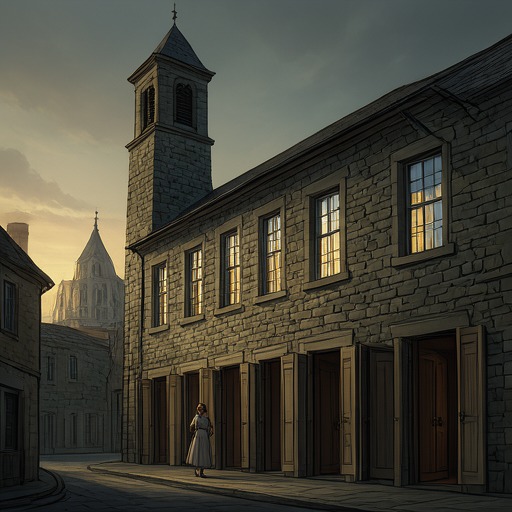
Bill circles the convent and sees its high walls, broken glass, and blackened windows with metal grilles. The building’s neat [Christmas](entity:time-recall-time-christmas-a573265d0167) appearance now sits against the signs of confinement, and Bill approaches the coal shed knowing he must decide whether to act.
Christmas Eve 1985, late at night
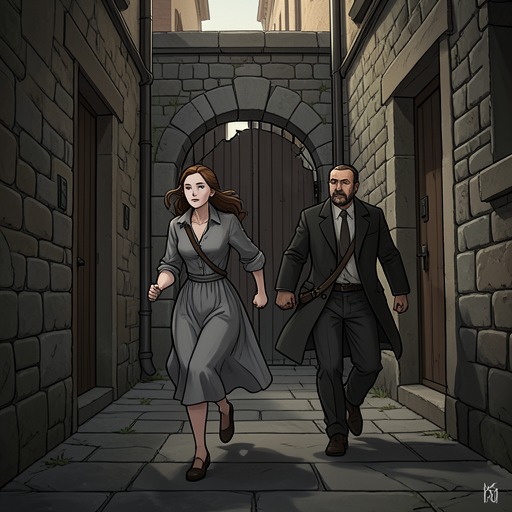
Bill Rescues Sarah
Bill opens the coal shed and calls to Sarah, who takes his coat and leans on him as they leave. He tells her she will come home with him, choosing to remove her from the convent despite the danger to his livelihood and his daughters’ place in the local social order.
Christmas Eve 1985, on the way home
The Walk Through Town
As Bill walks with Sarah through the snow, people recognize that she is a convent girl but no one offers her help or asks where she is going. A child mocks her bare feet, while other townspeople avert their eyes; their silence makes Bill’s choice more visible and more perilous.
Christmas Eve 1985, near midnight
The Manger in the Square
Sarah pauses at the town’s nativity scene and strokes snow from the donkey’s ear, calling it lovely. Bill helps her continue, seeing in the encounter a fragile moment of tenderness amid the cold and the harm she has endured.
Near the ending
Bill Chooses to Continue
Walking home with Sarah, Bill asks himself whether anyone can live without helping others and still call himself a Christian. He feels an unfamiliar joy alongside his fear, and thinks of [Mrs Wilson](entity:character-recall-character-mrs-wilson-9042944245f3)’s small acts of care that had changed the course of his own life.
The ending, Christmas Eve 1985
A Door Left Open
As Bill brings Sarah and the shoes for Eileen toward his front door, he knows trouble may be waiting inside and beyond it. He also knows that the greater burden would have been leaving Sarah behind, and hopes that his family will find a way to manage what comes next.
1996
The Last Laundry Closes
The author’s note states that [Ireland](entity:location-recall-location-5359e95725af)’s last Magdalene laundry did not close until [1996](entity:time-recall-time-1996-64d3f312c855), years after the novel’s [Christmas Eve](entity:time-recall-time-christmas-eve-4c9949af68dd). The institutions had concealed and confined women and girls, and the full scale of their forced labor was difficult to establish because records were missing or inaccessible.
2013
The Government Apology
The author’s note records that the Irish government did not issue an apology for the Magdalene laundries until [2013](entity:time-recall-time-2013-c9ceda4a44e7). The delayed apology underscores the distance between the Republic’s promised equality and the long public silence surrounding the institutions.
2014
The Tuam Findings
The author’s note describes historian Catherine Corless’s public disclosure that 796 babies died in the Tuam home between 1925 and 1961. The discovery exposed the scale of infant deaths in institutions connected to the mother-and-baby home system.
After the 2014 Tuam findings
The Commission’s Death Toll
The author’s note cites an Irish Commission of Investigation report finding that nine thousand children died in eighteen of the institutions it investigated. It connects the private suffering represented by Sarah’s separation from her baby to a history whose records and full human cost remain incomplete.